Bozeman doesn’t have a bad side of town. It has a small side of town and a bigger side of town, and that’s really the whole decision. Where you stay in Bozeman changes how much you drive, how much you pay, and how close you are to the things you actually came for — Main Street, Museum of the Rockies, or the trailhead at the edge of Hyalite Canyon. This guide breaks the city into its five real neighborhoods, tells you honestly who each one fits, and gives you actual price ranges instead of vague dollar signs.
Why Where You Stay in Bozeman Actually Matters
Bozeman is compact — you can drive from one end to the other in about fifteen minutes without traffic. But “fifteen minutes” adds up fast when you’re doing it four times a day between your hotel, dinner, the trailhead, and back. If you’re here for a long weekend of walking Main Street and eating well, staying anywhere outside downtown means you’re driving and parking for every single meal. If you’re headed to Bridger Bowl at 7 a.m. or catching an early flight out of Bozeman Yellowstone International Airport, downtown is the wrong call entirely.
Before you book anything, check the Bozeman event calendar against your dates — more on why that matters in the downsides section below.
Downtown Bozeman: Best for First-Timers and Foodies
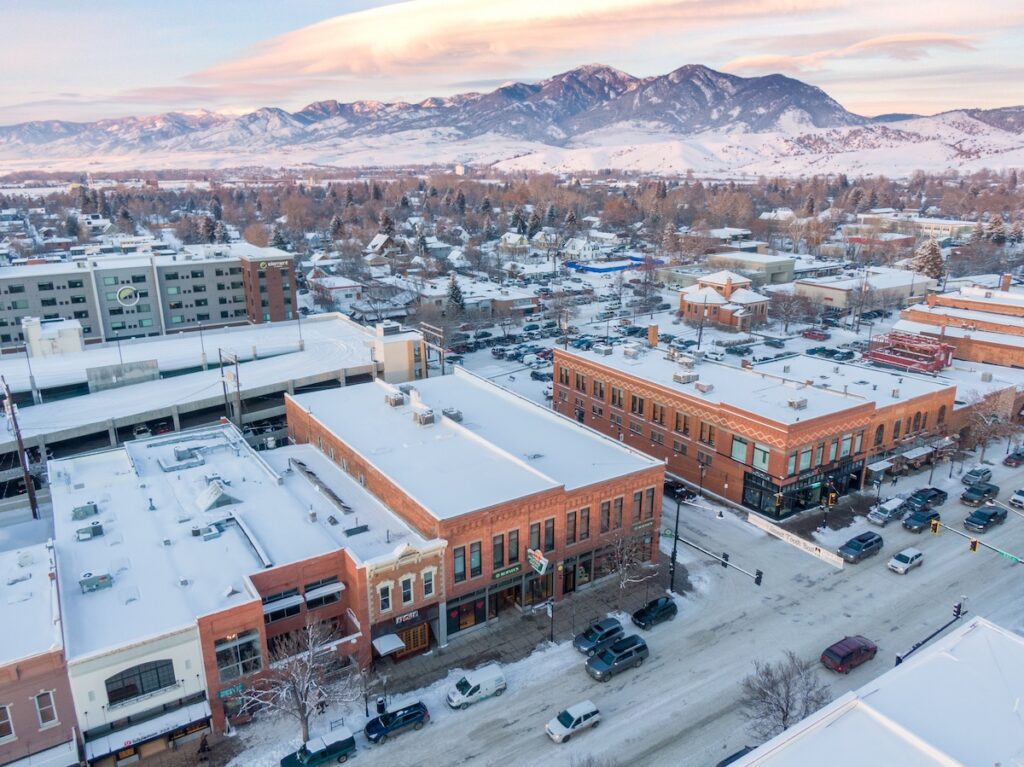
If this is your first trip to Bozeman, stay downtown. It’s the only area where you can walk to dinner, a brewery, and your room without touching your car keys. Main Street is the spine of the city: galleries, the restored Rialto Theater, Cactus Records, and most of the restaurants covered in our guide to where to eat in Bozeman all sit within a few blocks of each other.
Two newer properties have changed the downtown lodging picture in the past year. The Kimpton Armory Hotel, built into a converted 1958 armory building, added Shy Shed, a rooftop bar with fire pits and city views, and Tune Up, a basement whiskey bar with live music most nights. Field & Stream Lodge, which opened more recently a few blocks off Main, leans into an outdoors-meets-boutique look and is worth cross-shopping against the Armory if you want something newer with a quieter room.
- Kimpton Armory Hotel — $$$, historic building, rooftop bar, walkable to everything
- The LARK — $$, boutique motor-lodge style, good value for downtown
- Field & Stream Lodge — $$$, newer property, outdoors-focused design
- AC Hotel by Marriott Bozeman Downtown — $$$, modern chain option a few blocks off Main
- Treasure State Hostel — $, the only true budget bed in the downtown core
Who it’s for: First-time visitors, couples, anyone without a rental car, foodies who want to walk to dinner. Skip it if: You need free parking, you’re on a tight budget outside the hostel, or you’re headed out early for skiing or hiking and don’t want to fight downtown traffic to leave town.
Northeast Bozeman: Best for Food-Focused Travelers on a Budget
Northeast Bozeman has the proximity to the food-scene. The Cannery District has turned a former industrial stretch into a cluster of good, unpretentious restaurants and coffee shops, and Wild Crumb bakery draws a line most mornings. It’s also the closest lodging base to Bridger Bowl ski area, which matters if skiing is the point of your trip rather than an afternoon add-on.
- SpringHill Suites by Marriott Bozeman — $$$, closest chain option to the Cannery District
- Hampton Inn Bozeman — $$, reliable mid-range, easy highway access
- Baymont by Wyndham Bozeman — $, the budget pick in this part of town
Who it’s for: Skiers headed to Bridger Bowl, budget-conscious travelers who still want good food nearby, anyone with a car who doesn’t need to walk to Main Street. Skip it if: You want to walk everywhere without driving.
South Side: Best for Museum of the Rockies and MSU Game Weekends
South Side sits next to Montana State University and the Museum of the Rockies, home to one of the most complete T. rex specimens on public display anywhere. If your trip includes the museum, a Bobcats football game, or you’re dropping off or picking up a student, this is your neighborhood. It also puts you closest to the Gallagator and Sourdough trailheads if you want a walk or run before breakfast without driving anywhere.
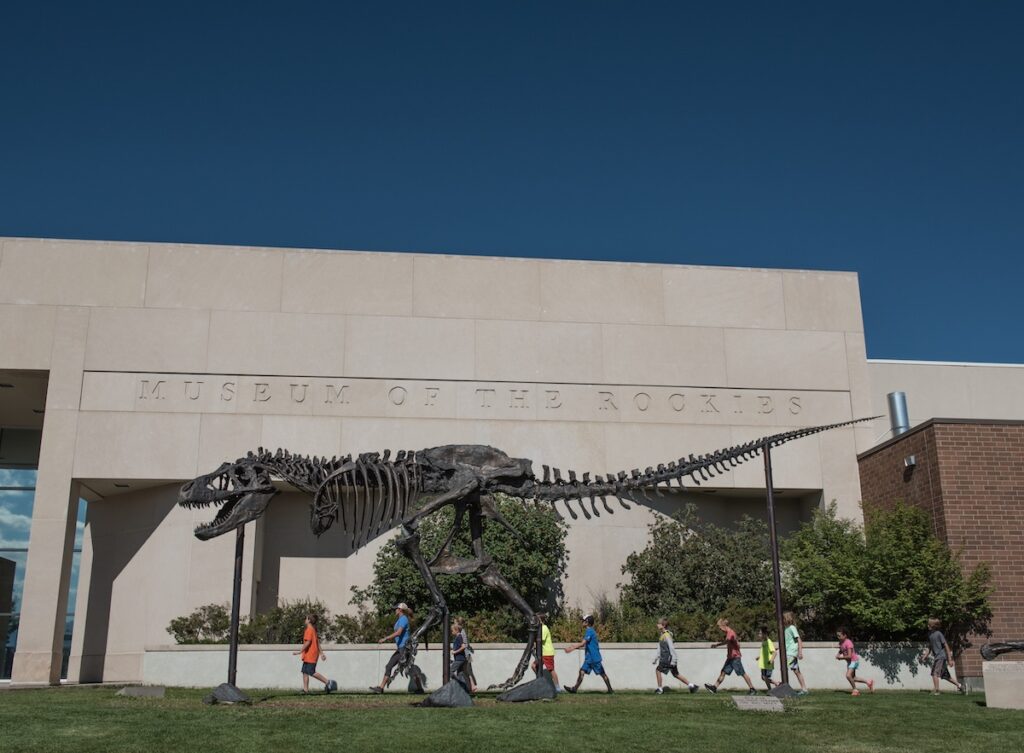
Who it’s for: Museum visitors, MSU families, anyone who wants trail access without leaving the neighborhood. Skip it if: There’s a home football game on your dates and you haven’t booked — see the downsides section below.
West Bozeman: Best for Families and Big-Box Convenience
West Bozeman is quiet, residential, and built around families rather than visitors, which is exactly its appeal if you’re traveling with kids. Regional Park has a dinosaur-themed playground and a dog park, and Gallatin Valley Mall covers the “we forgot something” errands every family trip eventually needs. It’s also one of the closer bases to Hyalite Canyon if hiking is on the agenda — see our guide to the best hikes near Bozeman for trail specifics.
Who it’s for: Families with kids, longer stays where errands matter, Hyalite Canyon hikers. Skip it if: You want nightlife or walkable dining — there isn’t much of either here.
Northwest Bozeman: Best for Early Flights and Yellowstone Road Trips
Northwest Bozeman sits right off I-90 and is the closest lodging cluster to the airport — a real consideration given how often Bozeman Yellowstone International runs early departures. It’s also the practical choice if Bozeman is a one-night stop on a longer Montana road trip rather than the destination itself, since you can get in, sleep, and get back on the highway toward Yellowstone or Glacier without crossing town.
- Country Inn & Suites by Radisson — $$, 5.6 miles from the airport
- MountainView Lodge and Suites — $$, close to MSU and the airport
- Comfort Suites Airport-University — $, straightforward and close to the airport
Who it’s for: Early or late flights, one-night highway stops, road-trippers passing through. Skip it if: Bozeman itself is the trip — this area has the least character of the five.
Where to Stay for Skiing: Bridger Bowl vs. Big Sky Access
Bridger Bowl is a 25-minute drive from downtown, so any Bozeman hotel works for a day trip — Northeast Bozeman shaves a few minutes off that drive. Big Sky Resort is a different story: it’s roughly an hour south, and if you’re skiing there multiple days, staying in Bozeman means an hour each way rather than staying at the resort itself. For a single ski day at Big Sky, Bozeman still works. For three or more days, you’ll save real time by basing closer to Big Sky and treating Bozeman as a bookend. Lift ticket prices for both mountains and advice on the Big Sky drive are in our Bozeman in winter guide.
Bozeman Lodging Costs by Season
Nobody publishes an honest Bozeman lodging budget, so here’s ours, based on downtown mid-range hotels:
- Summer (June–August): $200–$400+ per night downtown, $150–$250 outside downtown. This is peak season for both tourists and MSU move-in.
- Fall (September–October): $150–$275 downtown. The best value window — fewer crowds, prices drop, weather is often still good. Watch for MSU home football weekends, which spike prices even in this window.
- Winter (December–February): $150–$250 downtown, higher on weekends near Bridger Bowl’s best snow windows.
- Spring (March–May): $120–$220 downtown. The cheapest window of the year, though it’s also mud season — see our month-by-month guide to visiting Bozeman for what that actually means on the ground.
For a full trip budget beyond lodging — food, activities, transportation — see our complete cost of visiting Bozeman breakdown.
Vacation Rentals and Cabins Near Bozeman
Every neighborhood above has a solid Airbnb and VRBO presence, and for groups of four or more, a rental usually beats stacking hotel rooms on price. Downtown and Northeast rentals put you walking distance from restaurants; West Bozeman rentals tend to be larger and better suited to families who want a yard or extra space. If you want something further out — a cabin with more separation from town — look toward the Gallatin Canyon corridor heading toward Big Sky, though that trades convenience for scenery.
Honest Downsides: Parking, Game-Day Surges, and Booking Early
Nobody writes this part, so here it is straight. Downtown parking is genuinely tight in summer — most hotels charge for it, and street parking fills fast on weekend evenings. If you’re staying downtown, budget for a parking fee or plan to walk more than you’d expect.
MSU home football weekends (typically several Saturdays between September and November) push lodging prices up across the entire city, not just South Side — book those dates as early as you can, or expect to pay a real premium. The same is true for the week of MSU move-in in late August.
Bozeman lodging in general books up faster than the town’s size suggests, particularly July through early September and any ski weekend with a fresh powder forecast. If you have specific dates, book them the moment your travel plans are firm rather than waiting.
Quick Answer: Where Should You Stay in Bozeman?
- First visit, no car, want to walk everywhere: Downtown
- Skiing at Bridger Bowl, watching your budget: Northeast Bozeman
- Museum of the Rockies, MSU visit, or a home game: South Side (book early)
- Traveling with kids, longer stay: West Bozeman
- Early flight or one night on a longer road trip: Northwest Bozeman
FAQs: Where to Stay in Bozeman
Is it better to stay downtown or near the airport in Bozeman?
Downtown if Bozeman is your destination; near the airport (Northwest Bozeman) only if you have an early flight or you’re passing through on a longer road trip.
How far in advance should I book a Bozeman hotel?
For summer, ski weekends, or any MSU home football Saturday, book as soon as your dates are set — those windows sell out weeks ahead. Spring and weekday fall stays have more flexibility.
Do I need a rental car if I stay downtown?
Not for downtown dining and shopping, but you’ll want one for Hyalite Canyon, Bridger Bowl, or any day trip toward Yellowstone or Big Sky.
For the full trip beyond lodging, start with our complete Bozeman travel guide, or plan your visit around the Bozeman CVB’s event calendar before you book.