Bozeman in winter is a great homebase to explore some of the best skiing Montana has to offer. You can ski Bridger Bowl in the morning, soak at a hot spring in the afternoon, and walk to dinner on Main Street. Yellowstone is still open on its north side, the ice in Hyalite Canyon draws climbers from around the world, and hotel rooms in town cost less than they do in July.
It also gets properly frigid, the days are short, and the drive to Big Sky can sometimes present challenges. This guide covers what to do, what it costs for the 2026-27 season, which dates to plan around, and what winter driving here actually involves. For the bigger picture on the town, see our Bozeman travel guide.
What Winter in Bozeman Is Really Like
Bozeman sits at about 4,800 feet. Daytime highs in the middle of winter land in the mid-30s, nights drop into the teens, and most winters bring at least one stretch when an arctic front pushes temperatures below zero for several days. The town itself gets less snow than people expect, because most of it falls on the mountains. That’s good news for driving around town and great news for Bridger Bowl.
| Month | Average high | Average low | Snow in town |
|---|---|---|---|
| November | 43°F | 21°F | 8 in. |
| December | 33°F | 12°F | 11 in. |
| January | 35°F | 14°F | 9 in. |
| February | 38°F | 17°F | 6 in. |
| March | 47°F | 24°F | 8 in. |
The sun helps. Clear, bright days are common, and 20 degrees with no wind feels very different from 20 degrees in a humid climate. The short days matter more than the temperature: in December the sun can set before 5 p.m., so plan outdoor things for the morning and save the hot springs, museums, and dinner for after dark.
Skiing: Bridger Bowl vs. Big Sky
Bozeman has two ski areas within an hour, and they could hardly be more different.
Bridger Bowl
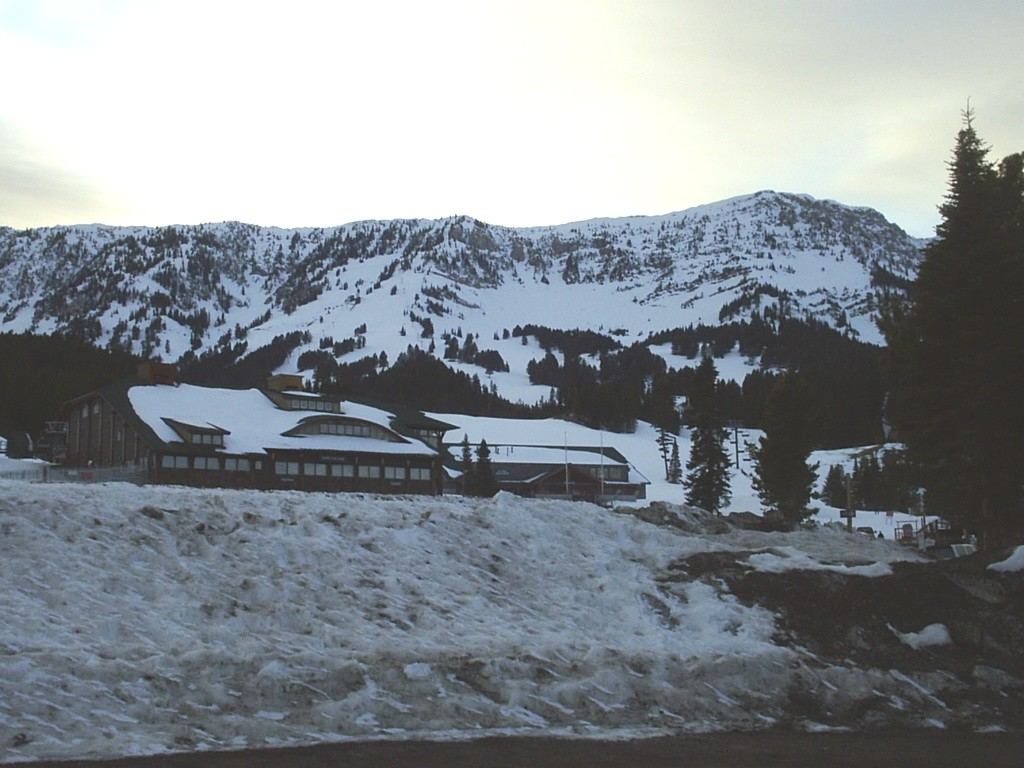
Bridger Bowl is about 16 miles up Bridger Canyon, roughly 25 minutes from downtown. It has been a nonprofit since 1955, which is a big reason the lift tickets cost what they do. It’s the mountain locals ski before work and on powder days, with no base-area village and a lodge full of people who live in the valley.
For 2026-27, an adult day ticket is $86 bought online or $99 at the window, and a half day starting at 12:30 p.m. is $74. Juniors 13 to 18 pay $54 online, kids 7 to 12 pay $40, seniors 70 to 79 pay $50, and kids 6 and under and skiers 80 and up ski free when you get the ticket online. Buying ahead saves $13 on an adult ticket, so do it the night before. Prices are on the Bridger Bowl ticket page. The mountain usually opens in December, once there’s enough snow.
The honest downsides: the parking lots fill early on powder weekends, and the famous Ridge terrain at the top isn’t for visitors who want to test themselves. Bridger requires a working avalanche transceiver for anyone going up there, and the terrain is steep, exposed, and expert-only. Everything below the Ridge offers plenty for intermediate and advanced skiers.
Big Sky Resort
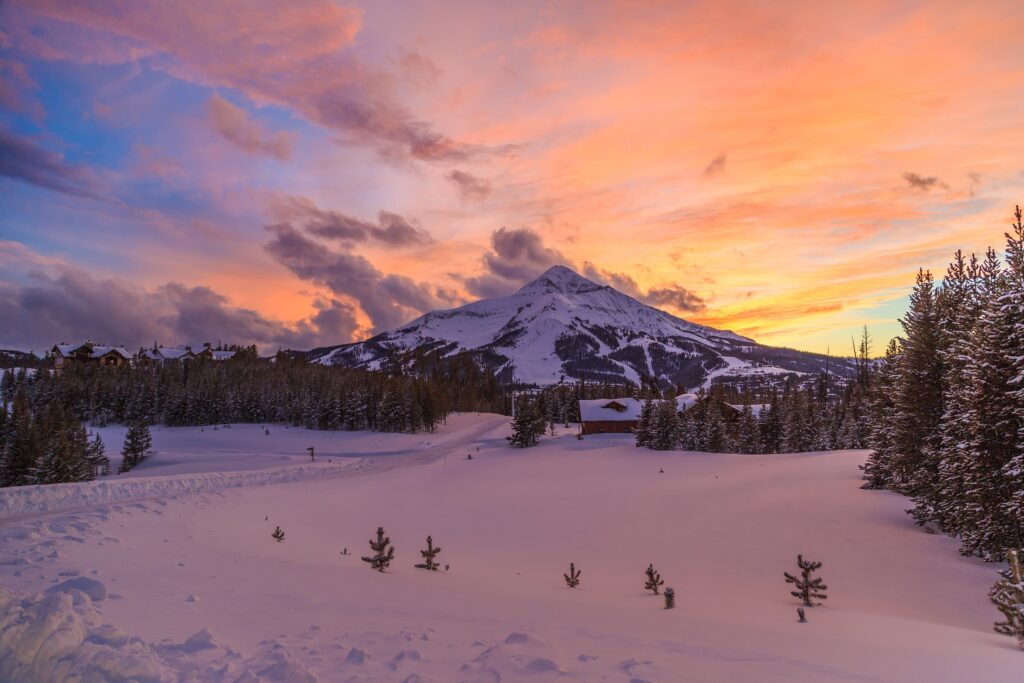
Big Sky is the big mountain: an hour south through Gallatin Canyon, with the Lone Peak Tram, a resort village, and prices to match. The resort opens for the season on November 25, 2026. Lift tickets use dynamic pricing, so the price depends on the date and how far ahead you buy, and walk-up tickets on holiday weekends cost a lot more than tickets bought weeks in advance. Kids 6 and under ski for $1 a day. Check current prices on Big Sky’s lift ticket page.
If you’d rather not drive the canyon, the Skyline bus runs between Bozeman and Big Sky for $5 each way, with the winter schedule starting November 23, 2026.
Which One Should You Ski?
If you’re staying in Bozeman and watching your budget, ski Bridger. You’ll pay less than half of what a peak day at Big Sky costs, and you’ll be back in town for lunch if you want. If you want huge terrain, the tram, and a resort vacation, stay in Big Sky for at least part of the trip instead of commuting the canyon every day. Our guide to where to stay in Bozeman covers which part of town is closest to Bridger, and the Bozeman cost guide shows what adding Big Sky does to a budget.
Yellowstone in Winter from Bozeman
Most of Yellowstone closes to cars in early November, but the park stays open all winter, and there are two ways to see it from Bozeman.
Drive the Northern Road
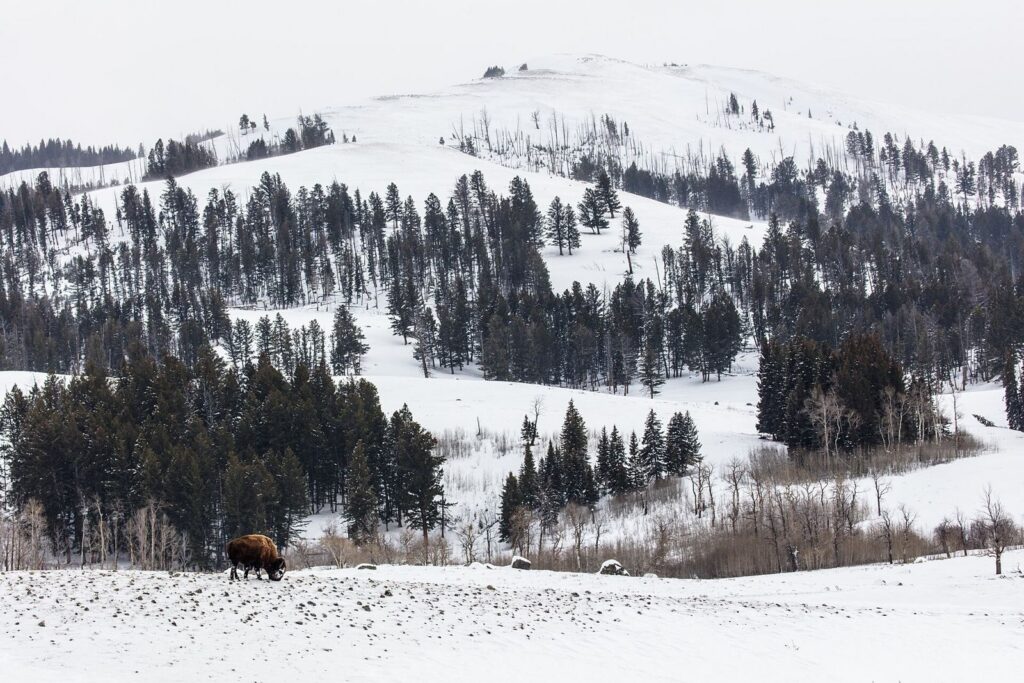
The road from the North Entrance at Gardiner through Mammoth Hot Springs and Lamar Valley to Cooke City is the only road in the park open to regular cars all year. It’s about an hour and a half from Bozeman to Gardiner by way of Livingston and Paradise Valley. Winter is a good time to look for wildlife here: bison and elk move down to lower ground, and wolves are easier to spot against the snow. Leave early, bring binoculars, and check Yellowstone’s road status before you go, since storms can close the road.
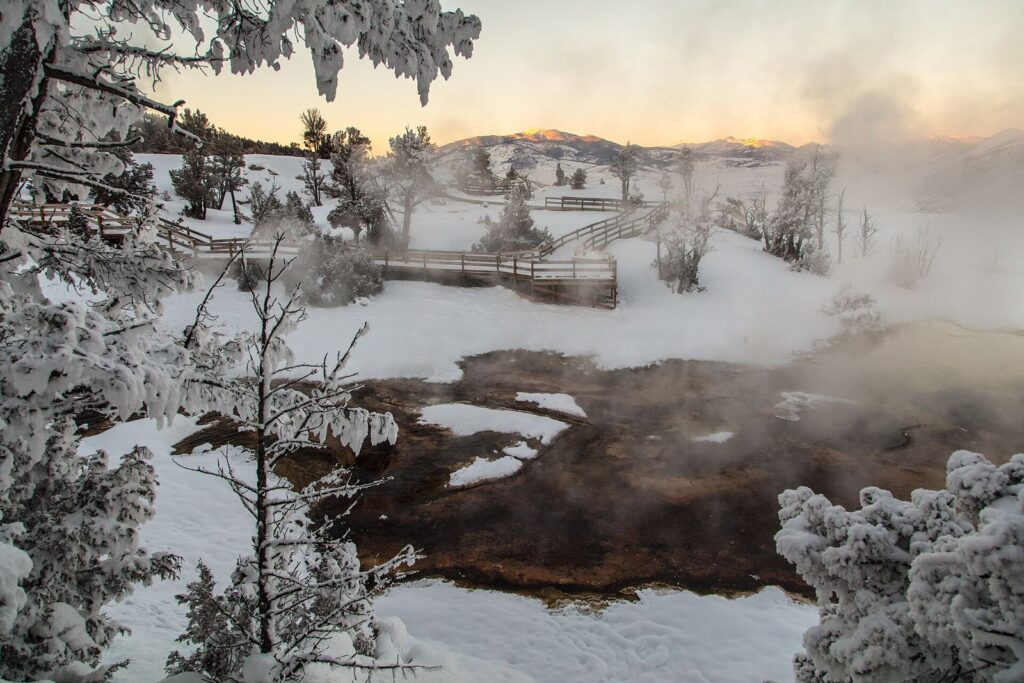
The Mammoth Hot Springs terraces are even better in winter, with steam rising off the travertine and frost on everything around it. The Mammoth Hotel and Cabins are open for the winter season from December 15, 2026, to March 8, 2027, if you want to spend the night inside the park. Our guide to day trips from Bozeman has the full North Entrance route, plus a stop at Chico Hot Springs on the way home.
Take a Snowcoach or Snowmobile Tour
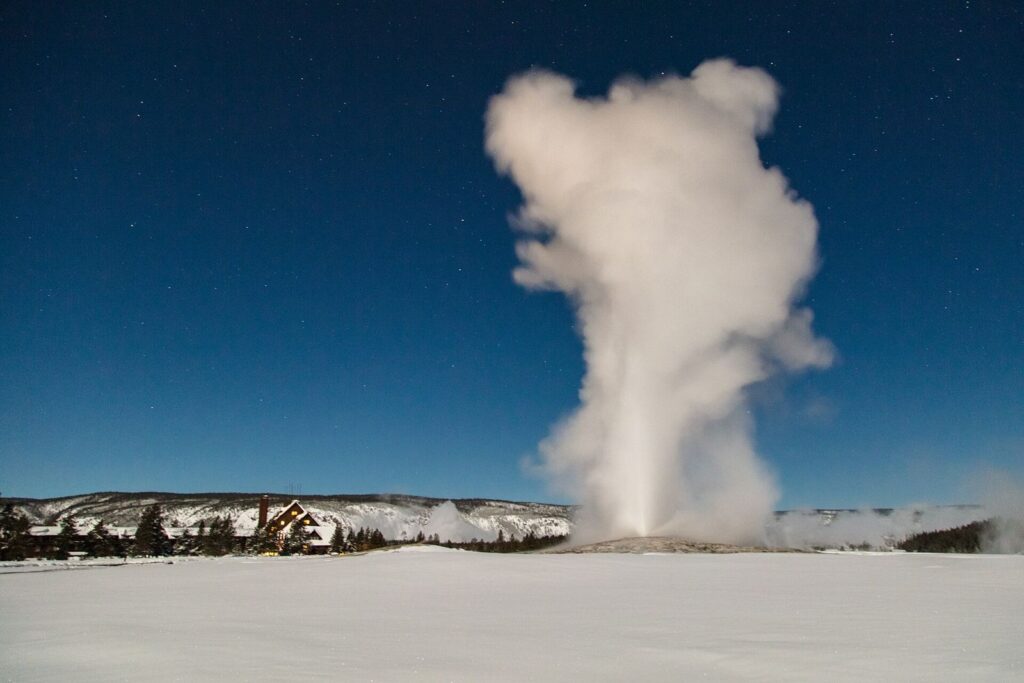
The rest of the park, including Old Faithful and the geyser basins, opens to over-snow travel on December 15, 2026, and stays open into mid-March. You can only get in on a guided snowcoach or snowmobile tour (or the park’s limited non-commercial snowmobile permits). Most tours leave from West Yellowstone, about an hour and 45 minutes from Bozeman, with others from Gardiner and Mammoth.
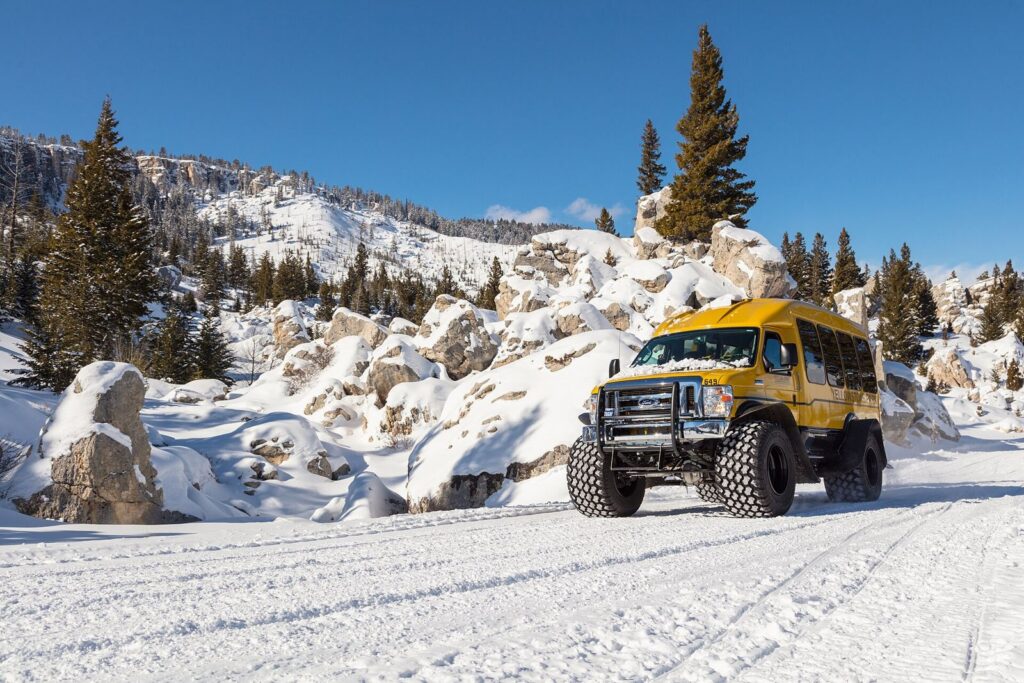
A day tour from West Yellowstone to Old Faithful and back is a long, full day, and the drive to West Yellowstone and back adds nearly four more hours. The better plan is to spend the night in West Yellowstone before your tour, or book a night at the Old Faithful Snow Lodge, which is open December 16, 2026, to March 7, 2027, and reachable only by snowcoach or snowmobile. Seeing Old Faithful go off with no crowd around it, in the snow, is worth the effort.
Hot Springs Near Bozeman
A soak after a day in the snow is the most Bozeman thing you can do in winter.
Bozeman Hot Springs is about 15 minutes west of town on the way to Big Sky, with a dozen indoor and outdoor pools at a range of temperatures. Weekday admission is $28 for adults ($21 with a Montana ID), and weekends and holidays are $34 ($28 with a Montana ID). It’s open Monday through Thursday from 5:30 a.m. to 11 p.m. and Sunday from 8 a.m. to 11 p.m. On Friday it closes at sundown and on Saturday it opens at sundown, so check the calendar on the Bozeman Hot Springs site before you plan a Friday night soak.
Norris Hot Springs, 40 minutes west, keeps its wooden pool up to 106 degrees in winter and is open Thursday through Monday. Chico Hot Springs in Paradise Valley is about an hour away and makes a natural last stop on the way back from Yellowstone’s North Entrance. Prices and hours for both are in our day trips guide.
Ice Climbing in Hyalite Canyon
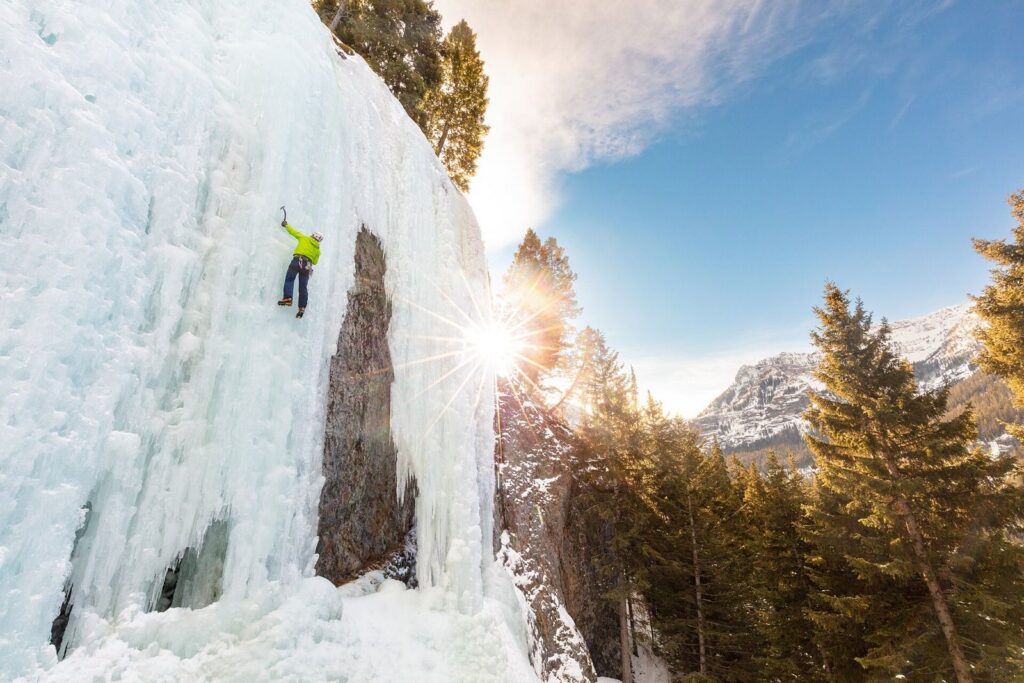
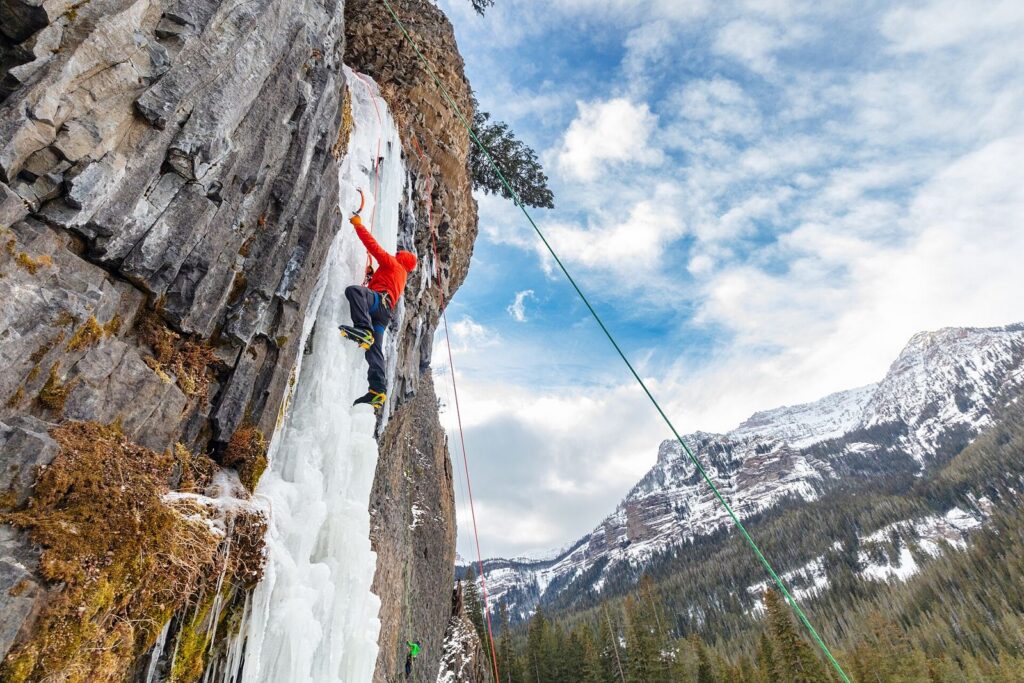
Hyalite Canyon, 30 minutes south of town, is one of the best-known ice climbing areas in the country, and winter access depends on an unusual arrangement. Gallatin County, the Custer Gallatin National Forest, and the nonprofit Friends of Hyalite split the cost of plowing the canyon road from mid-November through March 31, which makes Hyalite one of the few places where a local government plows a Forest Service road just for recreation. Before that arrangement began in 2009, winter access usually ended sometime between Thanksgiving and Christmas.
You don’t need to climb to enjoy it. The road gets you to trailheads for snowshoeing and winter walks, and the frozen falls are worth seeing from the bottom. If you do want to try ice climbing, go with a guide. The road is steep and icy in places, so drive it slowly with good tires, and read the Friends of Hyalite winter road page before you go.
The 30th Bozeman Ice Festival runs December 9 to 13, 2026, with climbing clinics in Hyalite for every level and evening events at the Emerson Center downtown. Clinics fill up, so register early through the Bozeman Ice Fest site.
Cross-Country Skiing and Snowshoeing
Crosscut Mountain Sports Center in Bridger Canyon, on the way to Bridger Bowl, is a dedicated Nordic and biathlon center with groomed trails, rentals, and lessons. Day pass prices are posted when the season opens.
For snowshoeing, many of the summer trails in our guide to the best hikes near Bozeman work in winter, including the short walk to Palisade Falls in Hyalite. Some of them cross or run below avalanche terrain, so check the Gallatin National Forest Avalanche Center forecast before heading into the mountains. Even the M Trail on the edge of town gets icy enough that traction devices on your boots make a real difference.
Things to Do in Bozeman in Winter When You Don’t Want to Be Outside
- Museum of the Rockies. Dinosaurs, Montana history, and a planetarium, open daily 9 a.m. to 5 p.m. Admission is $20 for adults, $17 for seniors, and $14 for ages 5 to 17, sold at the door only. Planetarium shows are $6. Closed Thanksgiving, Christmas, and New Year’s Day. See the museum’s visit page.
- Free outdoor ice skating. The city floods and resurfaces rinks at Beall Park, Southside Park (which has a warming hut), and Bogert Park (covered). They usually open around Christmas and run into March, weather permitting. For indoor skating, Gallatin Ice at the fairgrounds has public skate times and rentals.
- Bozeman Winter Farmers’ Market. Select Saturdays from 9 a.m. to noon at the Gallatin County Fairgrounds, running from fall through May. Check the market calendar for dates.
- Main Street. Downtown is where Bozeman spends its winter evenings. Our list of the best restaurants in Bozeman covers where to eat, and our things to do in Bozeman guide has more ideas for indoor days.
- A sleigh ride dinner in Big Sky. Lone Mountain Ranch runs sleigh ride dinners from December through April, with a ride through the snow to a historic cabin and a prime rib dinner. Reservations open in early September, and popular dates go early, so book on the Lone Mountain Ranch site now if you want one.
Bozeman Winter Events and Dates for 2026-27
These are the dates that shape a winter trip, either because they’re worth planning around or because they fill up hotels.
- November 23: Skyline bus winter schedule begins.
- November 25: Big Sky Resort opens for the season.
- December 5: The 46th annual Christmas Stroll on Main Street, 4:30 to 7:30 p.m., with the lighting of the downtown decorations, horse-drawn wagon rides, and food vendors.
- December 9 to 13: Bozeman Ice Festival.
- December 15: Yellowstone’s winter season opens to snowcoaches and snowmobiles.
- December 18: Montana State University’s fall commencement. Graduation weekend fills hotels and pushes up room rates, so book early or pick another weekend.
- Christmas to New Year’s: The busiest and most expensive stretch of the ski season at Big Sky.
- Early to mid-March: Yellowstone’s winter lodges close (Old Faithful Snow Lodge on March 7, Mammoth on March 8).
Driving in Bozeman in Winter
This is where visitors get into trouble. The main roads in town are plowed quickly, but side streets turn into ruts, and intersections polish into ice. Outside town, three roads deserve respect.
- Gallatin Canyon (US-191) to Big Sky. Two lanes, tight curves, a river on one side and rock on the other, and heavy ski traffic morning and evening. If you aren’t comfortable on snow, take the Skyline bus.
- Bozeman Pass (I-90) toward Livingston. Wind and blowing snow can drop visibility to almost nothing, and the road is prone to black ice.
- Bridger Canyon Road to Bridger Bowl. Winding and often snow-packed on powder mornings, which is exactly when everyone is driving it.
All-wheel drive helps you get going, but it doesn’t help you stop. Tires matter more. When you book a rental, ask whether the car has real winter tires, and don’t assume an SUV will handle ice. Check MDT’s 511 map before any drive out of town, and keep a scraper, a warm layer, water, and a charged phone in the car. Our Montana webcams page has live views of Yellowstone and the ski areas so you can see conditions before you commit.
What a Winter Trip to Bozeman Costs
Winter works in your favor in Bozeman itself. Outside the holidays and graduation weekend, December is typically the cheapest month of the year for lodging in town. Big Sky runs the other way: winter is its peak season, and rooms and lift tickets there cost the most from Christmas through March.
A budget-minded ski day from a Bozeman base looks like an $86 Bridger ticket bought online, a $28 hot springs soak, and dinner downtown. A comparable day at Big Sky can cost several times that before you count lodging. Our full Bozeman cost guide breaks down lodging, food, and rental cars by season.
What to Pack
Layers beat one huge coat, because you’ll go from a frigid parking lot to a warm restaurant a dozen times a day. Bring a base layer, a warm mid layer, a windproof shell, a hat, and real gloves. Waterproof boots with good tread matter more than anything else, and a cheap pair of slip-on traction cleats will keep you upright on icy sidewalks and trails. Pack sunglasses and sunscreen too; sun on snow at this elevation burns faster than you’d think.
Frequently Asked Questions
Is Bozeman worth visiting in winter?
Yes, especially if you ski, want to see Yellowstone without crowds, or like hot springs. Lodging in town is cheaper than in summer, and Bridger Bowl is one of the best values in Montana skiing. Skip it if you hate driving on snow and don’t want to take shuttles.
How cold does Bozeman get in winter?
Average December highs are around 33°F with lows around 12°F. January and February are similar. Most winters bring at least one stretch below zero that lasts several days.
Do I need four-wheel drive in Bozeman in winter?
It helps, but good winter tires matter more. You can get around town in most cars. For Bridger Canyon, Hyalite, or Gallatin Canyon to Big Sky, you want all-wheel drive with winter tires, or take the Skyline bus to Big Sky.
Can you visit Yellowstone in winter from Bozeman?
Yes. You can drive from the North Entrance at Gardiner through Mammoth Hot Springs and Lamar Valley all winter. The rest of the park, including Old Faithful, is open from December 15 to mid-March on guided snowcoach and snowmobile tours, most of which leave from West Yellowstone.
What is there to do in Bozeman in winter if you don’t ski?
Soak at Bozeman Hot Springs, visit the Museum of the Rockies, skate on the free outdoor rinks, snowshoe in Hyalite Canyon, watch the ice climbers, or take a wildlife day trip to Yellowstone’s Lamar Valley.